ESG Reporting for Manufacturing: Industry-Specific Guide
Introduction
For the manufacturing sector, 2026 is a year of "operationalization." The days of high-level sustainability pledges are over. Today, manufacturers are being tested on their ability to deliver granular, product-level data to a global market that is increasingly taxing carbon at the border. Whether you are a small machine shop or a mid-sized electronics assembler, you are likely feeling the "regulatory squeeze" from two directions: upstream from material scarcities and downstream from enterprise customers who need your data for their own CSRD, SB 253 or CDP reporting.
Manufacturing is uniquely positioned in the ESG landscape because it is often "carbon-heavy" by nature. Unlike service-based firms, your footprint sits in your furnaces, your chemical processes, and your raw material supply chain, as well as in your laptops and travel. In 2026, the competitive advantage belongs to the manufacturer who can prove they are more "carbon-efficient" than their peers. This guide breaks down the industry-specific metrics, the impact of the Carbon Border Adjustment Mechanism (CBAM), and how to build a circular production model that drives both sustainability and profitability.
Section 1: The Manufacturing "Big Three" Metrics
While ESG covers a vast range of topics, 2026 regulations for the industrial sector focus heavily on three high-impact areas: Carbon Intensity, Resource Circularity, and Chemical Safety.
1. Energy and Carbon Intensity
In manufacturing, "Total Emissions" is often less important to a customer than "Carbon Intensity."
- The Metric: Tons of CO2e per unit of production (or per $1M in revenue).
- Why it matters: If your production volume doubles, your emissions will naturally rise. Reporting on intensity allows you to show that your processes are becoming more efficient even as you grow.
2. Waste Diversion and Circularity
The EU Packaging and Packaging Waste Regulation (PPWR), Regulation (EU) 2025/40, applies from 12 August 2026. Its main design rules (recyclable packaging, minimum recycled content in plastic packaging, and a 50% cap on empty space in grouped, transport and e-commerce packaging) phase in from 2030 at the earliest. Waste management is now a compliance topic as well as a cost center.
- The Metric: Percentage of "Non-Hazardous Waste Diverted from Landfill" and "Recycled Content in Finished Goods."
- Why it matters: Manufacturers who can demonstrate a "Closed-Loop" system (where scrap metal or plastic is fed back into production) can see lower raw material costs and higher ESG scores.
3. Chemical Management (PFAS and Beyond)
2026 is the year of "Chemical Transparency." Regulators are aggressively targeting "forever chemicals" (PFAS).
- The Metric: Percentage of products screened for restricted substances.
- Why it matters: If your components contain substances a market restricts, products that contain them can be barred from that market. Check the PFAS rules in the EU and in each US state or country you sell into.
Section 2: CBAM: The New "Carbon Border" Reality
If you export to Europe or provide components to those who do, you must understand the Carbon Border Adjustment Mechanism (CBAM), which moved into its definitive period on January 1, 2026.
What is CBAM?
It is essentially a carbon tax on imports. The EU wants to ensure that its own manufacturers (who pay high carbon prices) aren't put at a disadvantage by "cheap, high-carbon" imports from countries with lax regulations.
- In-Scope Sectors: Iron, steel, cement, aluminum, fertilizers, electricity, and hydrogen.
- The Requirement: Importers must surrender "CBAM certificates" corresponding to the embedded emissions in the products. Certificates go on sale in February 2027, and each year's imports are declared by 30 September of the following year.
- Impact for Manufacturers: If you produce steel or aluminum goods covered by CBAM, your EU customers will now demand "Product-Level Emissions" data. If your data is poor or your footprint is high, your product becomes significantly more expensive for your customer due to the CBAM levy.
Importers who cannot get actual embedded emissions data from you fall back on "default values," which carry a mark-up under Implementing Regulation (EU) 2025/2621: 10% in 2026, 20% in 2027 and 30% from 2028 (1% for fertilizers).
Section 3: Transitioning to Circular Manufacturing
The "Linear" model of Take-Make-Dispose is becoming financially unsustainable due to rising material costs and landfill taxes. In 2026, leading manufacturers are adopting Circular Economy principles to de-risk their business.
Strategies for SMB Manufacturers
- Design for Disassembly: Can your product be easily taken apart at the end of its life to recover valuable metals or plastics?
- Servitization: Instead of just selling a machine, sell the "output" (e.g., compressed air as a service). This incentivizes your company to build longer-lasting, more efficient equipment.
- Remanufacturing: By taking back old products and remanufacturing them to "like-new" condition, often sold as "Factory-Certified Refurbishment," companies can save much of the energy and material cost of building from scratch.
Section 4: Automating Manufacturing ESG Data
The biggest challenge for a factory manager is "Data Silos." Your energy data is in the utility portal, your waste data is on paper tickets, and your supply chain data is in a spreadsheet.
The Solution: ERP-Centric Reporting
In 2026, "Investment-Grade" data must be embedded in your operations.
- Direct Energy Monitoring: Use smart meters to track the energy use of specific production lines. This allows you to identify your most "carbon-expensive" products.
- Spend-Based Supply Chain Screening: For your thousands of smaller suppliers, use spend-based carbon accounting. By mapping your procurement spend to published emission factors, you get a first estimate of the Scope 3 emissions in everything you buy without sending a single questionnaire.
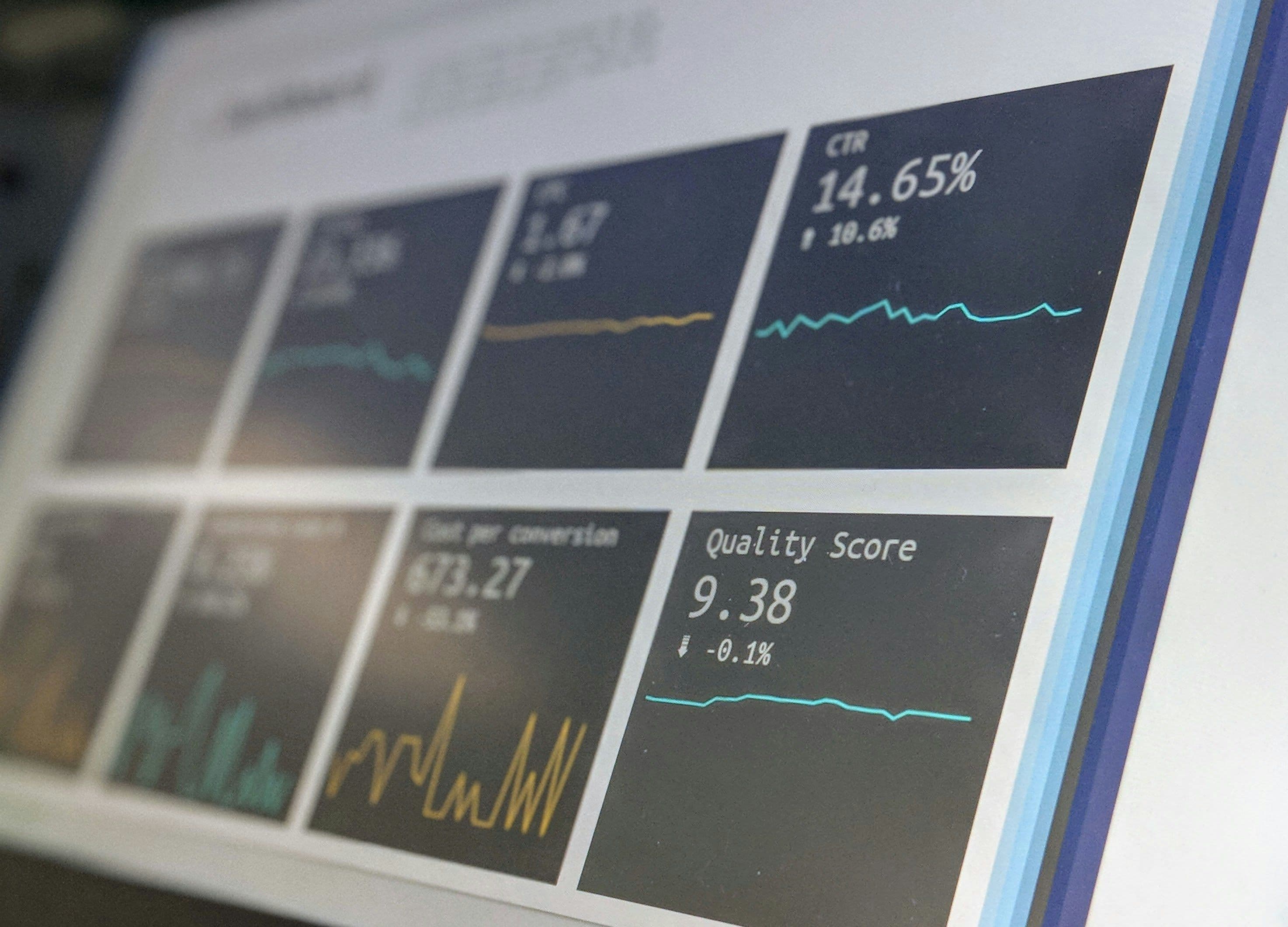
- Real-Time Dashboards: Don't wait until the end of the year to see your footprint. 2026 leaders use real-time ESG dashboards to catch "efficiency leaks" before they impact the annual report.
For the manufacturing industry, ESG is a core component of operational excellence and international trade. By focusing on intensity metrics, preparing for CBAM, and embracing circularity, you turn environmental compliance into a competitive moat. You can lead without a massive sustainability team if you treat your carbon and waste data with the same precision you apply to your quality control.
Ready to put a first carbon number on your manufacturing business? Upload your accounting export at aisustainablefuture.com/carbon-draft and, if you have them, enter your annual kWh and fuel volumes. You get a cited, screening-grade carbon report in minutes. Scope 1 and 2 from $20, Scope 3 from $49. It is one carbon report for every sector and does not calculate product-level or CBAM embedded emissions; Indian iron and steel exporters can use our CBAM Data Pack for that.